01
Hoarding Cleanup
Respectful sorting, removal, deep cleaning, and sanitizing for mild through severe situations.
Learn about hoarding cleanup →Clear the home. Protect the person.
Private, judgment-free help for hoarding situations, estates, overwhelming clutter, and hazardous property conditions. Start with a calm conversation and a clear plan.
Calls are confidential · Written scope before work · You approve what leaves
The right service depends on the condition of the home, what needs to be preserved, and whether health or safety hazards are present.
Respectful sorting, removal, deep cleaning, and sanitizing for mild through severe situations.
Learn about hoarding cleanup →Careful whole-home cleanouts after a loss, downsizing move, or transition to assisted living.
Learn about estate cleanout →Furniture, appliances, basement clutter, garage contents, and household debris removed.
Learn about junk removal →Discreet assessment and remediation for animal waste, sewage, gross filth, and other hazards.
Learn about biohazard cleanup →Deadline-focused cleanup for rentals, inherited homes, code concerns, and properties preparing for sale.
Discuss the property →Detailed cleaning and odor reduction after contents are removed and affected surfaces are accessible.
Ask about the scope →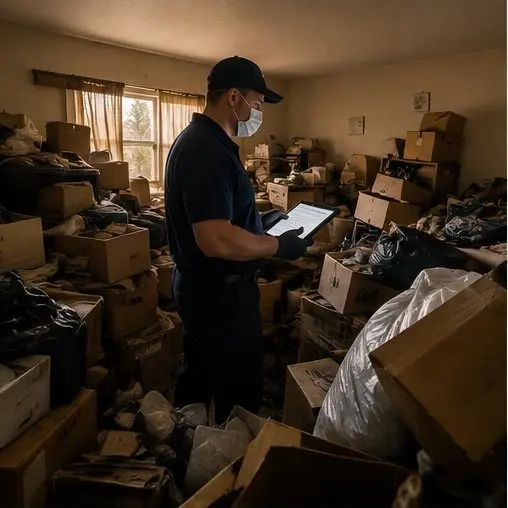
Describe the situation by phone, then arrange an on-site or video walkthrough when appropriate.
Review priorities, access, hazards, sorting rules, timeline, and the work included in the quote.
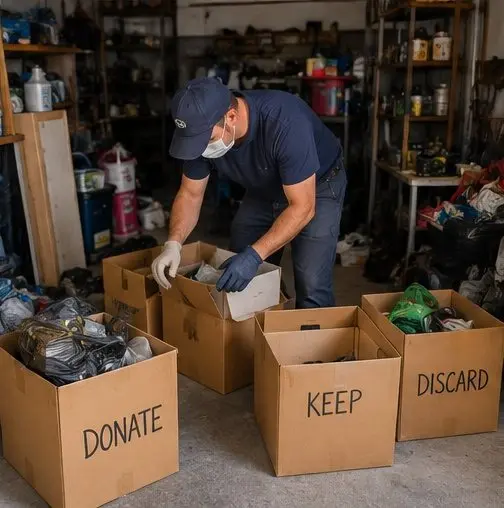
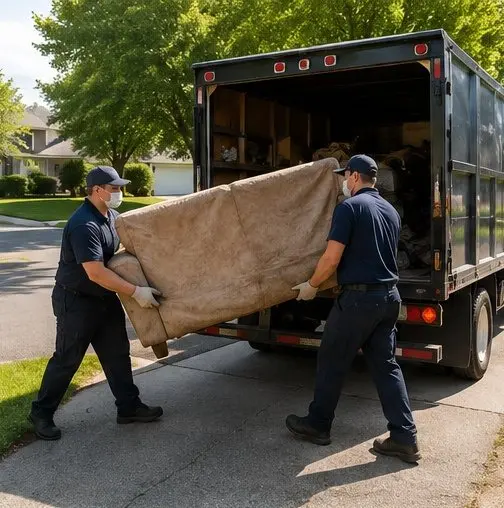
Belongings are grouped according to the plan. Approved items are donated, recycled, or removed.
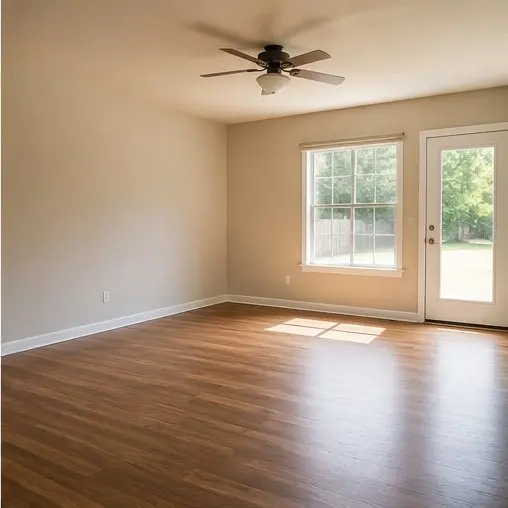
Accessible areas are cleaned, the property is reviewed, and any remaining needs are documented.
Hoarding affects families in complicated ways. Progress is more likely when the person has a voice, expectations are clear, and the work is broken into manageable decisions.
Neighborhood-specific pages explain local property and access considerations throughout Jefferson County, Bullitt County, and Southern Indiana.
Cost depends on the volume of contents, access, labor, disposal, and whether contamination is present. A private assessment is the best way to receive a written scope and price.
No. The plan should define keep, donate, recycle, and discard categories before removal begins. Important documents, photos, valuables, and sentimental items can be set aside for review.
Yes. Ask about scheduling, vehicle placement, and communication preferences during the initial call. The property and the people involved should be treated privately and respectfully.
A smaller project may take a day or two, while a severe whole-home situation can take several days or longer. Home size, access, decision-making, and biohazards all affect the timeline.
Yes. Help is available for estates, downsizing, rental turnovers, garages, basements, bulky furniture, appliances, and other non-hoarding cleanouts.
Do not move unstable piles or disturb suspected mold, sewage, sharps, or animal waste. Gather essential medication and identification only if it is safe, then leave the rest for the assessment.
Tell us what is happening. We’ll explain the next step without pressure or judgment.